
One Sector. One Charter. One Future.
On 24 April 2026, EV Belgium brought together representatives of its members during the Leadership Forum at De Schorre to address one central question: what do we, as a sector, need to do today to further develop electric mobility in Belgium by 2030?
This joint reflection led to the creation of the EV Belgium Charter 2030. Not a non-binding vision statement, but a series of concrete commitments made by the sector itself, complemented by policy priorities.
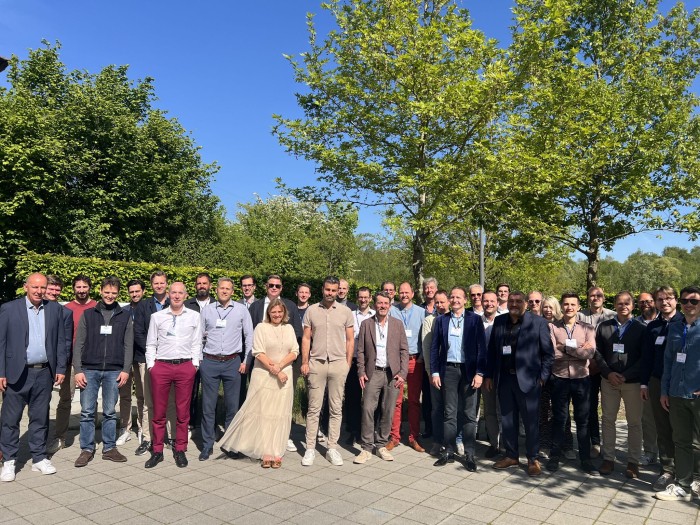
Following further development and consultation, the Charter was officially presented on 18 September 2026 at EnergyVille in Genk and signed by EV Belgium members.
 |
 |
Our ambition for 2030
The Charter outlines a future with two million electric vehicles on Belgian roads, more than 200,000 public and semi-public charging points, and an electricity grid in which smart charging and flexibility play a central role.
The ambition goes beyond numbers. Electric mobility must be affordable, reliable and accessible to both individuals and businesses, covering everything from passenger cars and vans to heavy-duty trucks.
Five commitments from the sector
Through the Charter, EV Belgium and its members commit to five concrete areas of action:
-
Policy – Active dialogue: working constructively with public authorities to establish a predictable and workable policy framework.
-
Market – Removing market barriers: developing solutions for interoperability, payments, charging prices and practical standards.
-
Data – Facts as a foundation: making reliable market data, analyses and forecasts available, including through the EV Barometer.
-
Communication – Shaping the narrative: communicating clearly, factually and accessibly about electric driving, with particular attention to the end user.
-
Industry – A high-performing ecosystem: working towards reliable charging infrastructure, transparent pricing, smart charging and an improved user experience.
Eight policy priorities
In addition to its own commitments, the Charter sets out eight priorities for the 2026–2030 period: an ambitious roadmap towards 2035, a tax shift in favour of electricity, strengthening the private and second-hand markets, further expanding charging infrastructure, investing in grid capacity and V2X, strengthening industrial roots, developing talent and cybersecurity, and ensuring stable policies.
From commitment to action
The Charter is not an end point. EV Belgium will monitor its implementation together with its members and working groups and report annually on the progress achieved.
EV drivers will also have an active voice, including through an annual satisfaction survey and an EV Driver Council.